
Checking In on Your Family This Christmas
- YouFirst Chairs
- Dec 18, 2025
- 2 min read


What Sons and Daughters Might Notice at Home
Christmas is often one of the few times of year families come together under the same roof. For many sons and daughters, it’s a chance to spend unhurried time with parents or grandparents — and sometimes, that’s when small changes become noticeable.
Nothing dramatic. Nothing urgent. Just subtle signs that everyday comfort or safety isn’t quite what it used to be.
Here are a few things families often spot without actively looking for them.
Sitting & Standing
Struggling to stand up from the sofa or armchair
Using furniture, knees, or nearby surfaces to push themselves upright
Hesitating before sitting down, or “dropping” into the chair
Avoiding certain chairs altogether and sticking to one familiar spot
If standing up looks like hard work, the chair may no longer be giving the support it once did.
Leg Comfort & Circulation
Swollen ankles or feet by the end of the day
Cold legs or feet even in a warm room
Needing to prop feet up on stools or cushions
Complaints of aching legs, knees, or hips after sitting
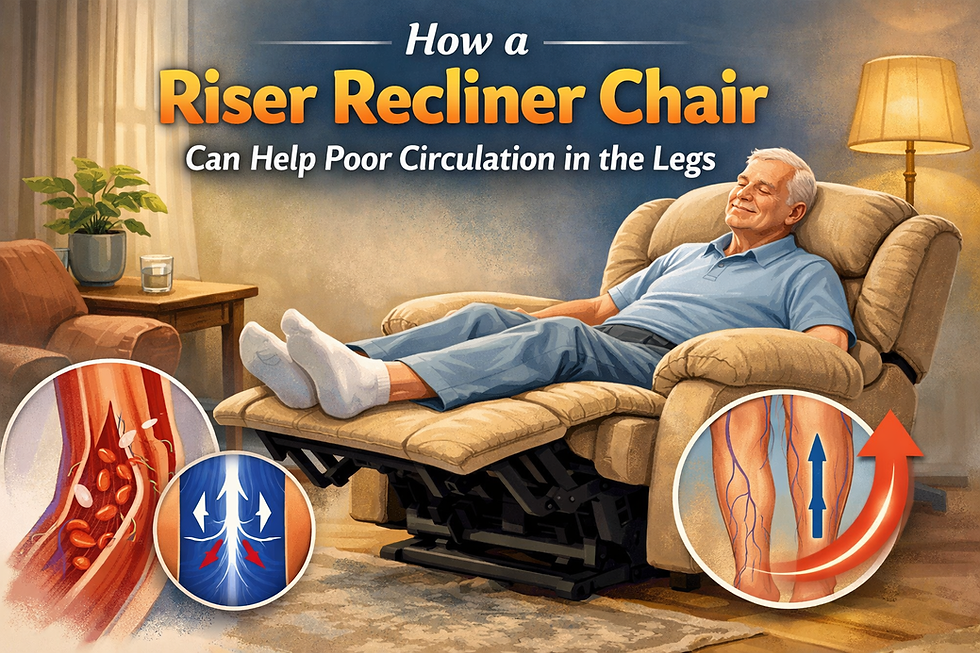
Good leg elevation can make a surprising difference to comfort and circulation.
Posture & Support
Sitting slouched or sliding forward in the seat
Constantly adjusting cushions or adding pillows
Neck, shoulder, or lower back discomfort
Napping upright because reclining feels awkward or uncomfortable
Supportive seating should help someone relax — not fight the chair to get comfortable.
Confidence Around the Home
Taking longer to move from room to room
Avoiding getting up once seated
Preferring to stay put rather than join in
Expressing worry about “having a fall” when standing
Often it’s not pain — it’s confidence that’s slowly being lost.
What Many Families Don’t Realise
Mobility furniture isn’t just for “later on” or for people who see themselves as unwell.
Modern riser recliner chairs and adjustable beds are designed to:
Make standing safer and easier
Improve comfort during the day
Reduce strain on joints and muscles
Support independence — not take it away
And importantly, they don’t have to look clinical or medical.

A Gentle Next Step
If you’ve noticed one or two of these signs, it doesn’t mean anything has to change immediately.
Often the most helpful step is simply:
Having an open conversation
Trying different seating options in a relaxed setting
Getting advice without pressure or obligation
Sometimes reassurance is all that’s needed. Sometimes a small change makes a big difference.


Comments